How to Improve Focus in Kids

Written by: Liza Gresko, Mom and PR Specialist at Moss Tucker Group
"How was school today?"
No response.
"Hey, Johnny, how was school today?"
"Huh?"
We've all been there. You try to talk to your child at breakfast or after school, and you have to repeat yourself or ask questions over and over. You try holding a conversation with them, and they quickly lose focus, becoming distracted by other things, such as gadgets like tablets or phones.
You begin to wonder, "are they like this at school, too? Is it me? Am I asking the wrong questions?"
In today's fast-paced, distraction-filled world, many parents find themselves asking, "How can I improve my child's concentration and focus?" Whether it's during homework time, at school, or even while doing chores, kids often struggle to stay on task. The good news is that focus isn't just a personality trait. It's a skill that can be developed and nurtured over time.
Here at SimplyFun, we believe one of the most powerful ways to help kids focus is through play. Educational board games not only teach valuable skills but also provide fun, engaging opportunities for children to practice self-regulation, attention, and perseverance.
In our latest blog post, we're exploring some practical strategies for how to improve focus in kids, and to see how some key SimplyFun games can help kids learn the art of paying attention and retaining focus.
Why Do Kids Struggle with Focus?

Before diving into solutions, let's take a moment to understand why kids may lose concentration. Focus requires several key skills: sustained attention, impulse control, memory, and the ability to filter distractions. For young children, these executive function skills are still developing. Even older children may find it challenging to juggle multiple demands, sit still for extended periods, or resist the allure of digital devices.
When parents search for answers to "how to help a child focus" or "how to help your child focus in school," what they're really looking for are tools and techniques to support their child's growing brain in a healthy, positive way.
The good news? Focus can be strengthened like an athlete practicing skills for a game. With practice, patience, and the right activities, children can learn to focus better.
Practical Tips: How to Improve Focus and Concentration in Kids

We found some great tips and techniques from PBS Tips for Helping your Child Focus and Concentration and included some tips of our own to help:
1. Schedule your child's routine
Children thrive when they know what to expect. A predictable schedule helps eliminate uncertainty and reduces the number of distractions competing for their attention.
2. Break Tasks into Smaller Steps
Asking a child to "clean your room" may feel overwhelming. But saying, "First, pick up the books. Next, put the toys in the bin" helps break down the task into manageable pieces, keeping them engaged and motivated.
3. Limit Distractions
Whether it's homework or play, kids need an environment with as few distractions as possible. Turning off the TV, putting away devices, and working in a quiet space makes it easier to stay focused. This also helps prevent your child from sensory overload.
4. Practice Mindfulness and Movement
Short mindfulness activities like deep breathing or stretching breaks can help kids reset when their attention starts to wander. Physical activity also improves blood flow and brain function, making it easier to concentrate.
5. Use Games That Strengthen Attention Skills
Parents searching "How to help child with focus issues?" often overlook that play time is actually an amazing tool to help your child focus. One of the best ways to strengthen these skills is to engage them in games that naturally build attention span, concentration, and memory. Play offers low-pressure, enjoyable practice in these skills, something worksheets and lectures can't always provide.
This is where our educational games shine. Our thoughtfully designed games encourage kids to slow down, pay attention, and engage fully in the moment (with complete joy!); skills that translate beautifully to school, sports, and daily life.
Spotlight: SimplyFun Games that Build Focus
Let's take a closer look at four SimplyFun favorites that directly support focus and concentration skills.
My Fun Day
1-2 players • 10 min • 3 & up

My Fun Day is a hands-on activity board that includes day/night pawn, stand, & activity discs. Use these pieces to help give context to the time of the day or night & how the seasons or weather can make a difference in what they wear. This delightful game is an activity board for toddlers in order to develop life and thinking skills such as telling time, establishing a routine, and focusing on a specific task one at a time. It also helps with identifying days of the week & months of the year, as well as seasons.
Tip: Stir up conversation every morning by using this activity board to help your child create awareness of their daily schedule. Encourage your child to look outside to see what the weather is like or discuss feelings before the day starts.
For parents wondering, "How to help my child focus in school?" My Fun Day is a great foundation builder. By helping kids understand and anticipate their daily structure, the game fosters a sense of routine that translates well into classroom expectations.
Dance Like a Lemur
2-5 players • 15 min • 4 & up

This super fun game is a great way to answer the question "How to help kids focus?" and the answer might surprise you: movement. Dance Like a Lemur taps into kids' natural love of music and motion while requiring careful attention and self-control.
In this silly, active game, players must carefully watch and mimic dance moves while keeping up with the rhythm. The catch? They must remember and repeat sequences, which requires listening carefully, controlling impulses, and staying in sync with others. Children imitate various animals like elephants, crabs, dogs, and cows through sounds, movements, words, and stories. They'll stomp, scuttle, bark, and moo their way to finding all the pieces to their puzzle, stopping only for the occasional dance party. It's a fantastic way to practice memory and gross motor skills in a joyful blend of learning, laughter, and animal antics.
Benefits include:
- Enhancing focus under pressure (don't miss your move!).
- Strengthening memory recall by remembering step sequences.
- Practicing attention-shifting, where a child moves quickly from one action to another.
This game is especially helpful for kids who have energy to spare and need a physical outlet to practice concentration. Parents often wonder "how to help your child focus in school" when sitting still is tough. Dance Like a Lemur gives kids practice focusing while in motion, making transitions to classroom activities smoother.
Amalgam
2-4 players • 30 min • 10 & up

Amalgam is a word-building game that challenges players to think quickly, scan for letters, and form words on the fly. Children mix up magical ingredients in their cauldron to brew the powerful potions. Unlike some slower-paced board games, Amalgam keeps kids engaged by requiring fast, focused thinking.
How it builds focus:
- Players collect ingredient cards to build the best potion, and remember what ingredients they are using. Your choice of ingredients depends on where your pawn lands, and special cards may help or hinder you. Players must concentrate intensely to spot and gather letter cards.
- Amalgam is a great game for developing strategy skills, as players collect as many of the same ingredient cards as they can, while at the same time, considering what their opponents are collecting.
- Amalgam also improves planning skills. Players think ahead, trying to collect cards where the number on the card equals the number of spaces they want to move on their next turn. Players try to project the number of points they may earn for that card at the end of the game as well.
If your child struggles with reading or spelling, this game doubles as an academic booster. Parents asking, "How can I improve my child's concentration and focus?" will find Amalgam provides a fun way to practice paying attention to details while also reinforcing literacy skills.
Bug Crafts
2-5 players • 30 min • 8 & up

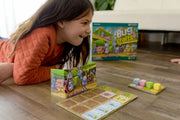
Buzz into a vibrant bug market where players collect and trade materials to craft for bees, ants, and ladybugs. Players use decision-making, planning, and resource management to outsmart fellow artisans and build the best Bug Crafts.
How this game improves concentration:
- Players visit the market to collect and trade craft materials to build crafts for the thriving bug community. The player with the largest, most diverse collection of bug crafts wins.
- Bug Crafts is great for decision-making. Players have opportunities to trade, build, or take in each turn. Players strategize on how to make the best trades of goods to be able to save up for the best craft before it is snatched by another player for maximum points each day. For children who struggle to complete assignments, Bug Crafts provides low-stakes practice in sticking with a project until it's done. It's a fun, hands-on way to learn perseverance—an essential ingredient in focus.
- Bug Crafts also helps develop Planning & Resource Management. Using basic math skills (including an introduction to factoring), players evaluate the market value of the materials, the number of materials saved, and the crafts available to build to make the best decision each round.
Everyday Play: How Games Build Lasting Skills
The great thing about using games like our SimplyFun options for focus-building is that kids don't even realize they're practicing important life skills. They're simply having fun. Yet through repeated play, they are:
- Strengthening working memory by remembering steps and sequences.
- Sharpening attention to detail, noticing small differences in patterns or letters.
- Practicing impulse control, waiting their turn, following rules, resisting distractions.
- Developing perseverance in finishing a round or project before moving on.
These are the same skills kids need to do well in school, sports, and everyday problem-solving. By playing these types of games, children are practicing important life skills for their current and future development.
Connecting Play to the Classroom

These important focusing skills that are practiced at home through play, routine, and encouragement directly impact classroom performance. So if your child is having trouble focusing in school or getting distracted at school, you're encouraging their development by implementing these playful tools at home.
When children play games like My Fun Day, they're learning to structure their day starting from a very early age and making it that much easier for them to follow a routine at school and adapt to classroom rules.
When they play Dance Like a Lemur, they're strengthening listening skills that help during lessons. They have to listen in order to play the game effectively and win.
When they play Amalgam, they're practicing word recognition that boosts literacy while also focusing on building words.
When they play Bug Crafts, they're practicing decision-making skills that help them focus on their choices and make good choices at school.
The playful practice carries over into real-world results.
If you've been wondering "how to improve focus in kids" or "how to help a child focus," it's important to remember focus isn't just about sitting still or paying attention in school. It's about building the brain's capacity to manage distractions, remember important details, and stick with tasks from beginning to end. It's actually something that adults even have trouble with and could benefit from game play!
Through thoughtful play, kids and their parents can practice these skills in a way that feels natural, enjoyable, and rewarding. These games are powerful tools to help kids focus better at home, in school, and beyond. It doesn't have to be a stressful time or feel like "work". Skill the stress and try a game night instead.