Unplugged Play: A Simple Self-Care Habit

Do you sometimes feel as if you are one news headline away from wanting to unplug, sell your gadgets, and go live off grid? Relatable. Many of us who grew up with technology are discovering that, while we love the convenience it provides, it can also leave us feeling overwhelmed.
Connected and informed? Yes. Anxious and overstimulated? Probably.
A little unplugged play may be your solution. Unplugged play offers our minds a chance to focus and unwind, which our fast-paced digital world rarely does. In our day-to-day lives, which consist of scrolling and consuming information, the antidote to productivity isn't always another digital tool, but often downtime and a chance to reboot the most important supercomputer we own: our brain! So, before the next digital 'ping' sends you running for off-grid living, take a step back and treat yourself to the self-care gift of unplugged play.
What is unplugged play? It comes in many forms, and while there are no rules, research suggests that using play as a screen-free break can offer numerous mental health benefits, such as sharpened focus and reduced stress. If you are ready to develop healthy habits that prioritize play and self-care, keep reading for practical tips to help you get started.
Why Play is Self-Care

Play comes in many forms and is an inherent aspect of being human. In an article on Psychology Today: Simple Secret to a Happy Life, Robert Puff Ph.D., claims:
“Two things that can greatly improve our lives are engaging in the here and now and seeing life as play rather than work.”
While this notion may seem easier said than done as we become adults and juggle careers and/or parenthood, the beauty of it lies in how adaptable PLAY can be to weave into our busy lives. A quick living room boogie while dinner simmers, writing a funny haiku about your dog, or a 10-minute card game are all fun examples. Mini moments filled with play can add up to life-changing habits that support your mental health, promote creativity, and help you connect in the here and now.
Screen-free play that involves a single task also helps our brains relearn to focus, while giving the prefrontal cortex a much-needed break from the fragmented thinking and overstimulation often associated with screen use.
The Art for Mindful Living and Self-Care

Taking a break doesn't have to be complicated or expensive, either. You might remember the Danish concept "Hygge" which is the art of cozy living. There are also several other self-care Scandinavian concepts that are trending, which those on a quest for practicing self-care could easily adopt.
- Lagom: is the art of balance. Not too much, not too little. Lagom is often associated with self-care because it encourages a no-judgement meets balanced approach to life. It's perfectly healthy to unwind by watching a movie or scrolling through social media, but it's also essential to strike a balance and make time for self-care, which may involve incorporating unplugged activities into your day, such as exercise, working on a puzzle, or spending time in nature.
- Mysa: is the Swedish equivalent to Hygge that embodies the art of unplugging and enjoying simple 'cozy' pleasures as a mindfulness practice. The 'Mysa' vibe might include enjoying a cup of hot cocoa by the fire while reading a book or enjoying a card game with your family in a cozy cabin.
- Fika: means taking a tea or coffee break while stowing away your phone and simply savoring the mindful moment with face-to-face interactions or a tangible task.
In a PBS article titled "5 ways to add the Swedish love of balance into your life" they claim:
"Putting down your tools and taking regular fika — coffee breaks — is actually a more efficient way of working since taking time out helps to rebuild your energy levels."
Simple Ways to Add Self-Care into Your Day
Ready to add a little more play, mindfulness, and self-care into your daily routine? Here are some self-care tips you can try!

Take Micro-Breaks for Self-Care
Have you heard of "micro-breaks?" Experts are calling it a simple solution that encourages mental health by taking 30-second to 3-minute mini breaks for every 40 minutes of work or screen time. The goal is to use this time as a reboot from chronic overthinking at the office or from overconsumption of information from our devices. A few examples of quick micro-break activities include stretching your arms and legs, practicing deep breathing techniques, or doodling on a notepad. The benefits of micro-breaks? Studies show improved focus, creativity, and stress reduction can be expected. Added bonus? You also don't have to give up your tech tools and social media feeds entirely to enjoy the benefits of micro-breaks.
Replace Adulting with 30 Minutes of Kidulting a Day!
For many of us who grew up playing board games, the nostalgia of setting up gameplay, rolling the dice, and planning our moves offered a sense of adventure on a Friday night. We could erupt in belly-aching laughter, catch up with loved ones while flexing our strategic thinking—all from the comfort of our living room. The best part? Game night was often a multi-generational activity that brought the whole family together for unadulterated, ‘kid-like’ fun as we tallied up points while snacking on popcorn.
Fast-forward to 2025- board games are a hot nostalgic trend among tabletop gamers seeking to sharpen their minds, reduce screen time, and revive their childlike wonder.
In fact, “The Toy Association found 58% of US adults bought a toy during the pandemic, with upticks in scooters, dolls, skateboards, and tabletop games,” according to trend platform WSGN.
Ready to take a break from news feeds and email pings?
Check out a few of our adult-friendly games you can play in 30 minutes or less:
SlideAscope
1-5 players • 20 min • 8 & up

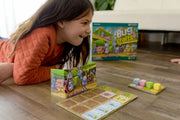
If self-gifting yourself games that improve brain performance is your jam, SlideAscope is the game for you! Tabletop gamers love playing this game solo, but you can also enjoy SlideAscope with up to 5 friends. In SlideAscope, get ready to study the grid and look for matching opportunities that yield the most points as you slide, rotate, and match by shape and color to collect tiles. Beat your last score or be the player with the highest points at the end of the game, to win!
Fossil Sweep
2-5 players • 20 min • 8 & up

Unplug with this irresistible, mood-boosting card game that promotes less screen time and more laughter and play. In this fossil layering card game, players strategically match fossil layers and play their cards wisely to clear their hand while avoiding the 'Sweep' card that ends the round. The player with the lowest score at the end of the game is crowned the winner!
Eye to Eye
3-6 players • 30 min • 10 & up

If a hilarious party game is your idea of self-care, get ready to see Eye to Eye in this category game where players try to find the most popular answers for points! For example, popular ice cream flavors may include rocky road, chocolate, and vanilla. Bacon-flavored ice cream? Not so much. Earn points for popular answers, and the player with the most points wins!
Our educational games not only allow players to decompress but also help develop essential soft skills, such as collaboration, critical thinking, and decision-making, making them both entertaining as well as investments in brain development and social-emotional growth.
Shop ALL: Game Night Collection Games
Commit to a 30-Minute, Screen-Free Play Practice
Making the commitment to unplug and enjoy play as a form of self-care can be as simple as doodling for 30 minutes instead of doomscrolling. Or a Friday game night with friends, instead of binge-watching a streaming show. The key is consistency, and even just 15 minutes a day can make a difference. It's normal to feel a touch of guilt when taking time out for yourself, especially when adult responsibilities begin to fill your calendar. However, remember that self-care is a non-negotiable practice that improves the way we show up in the world.
Self-care is not selfish, it’s vital!
In fact, self-care enables us to recharge and become more efficient in our careers and relationships. Not to mention, destressing is one of the most essential ways we can improve our mood and immune system. In our complex, adult lives, self-care is one of the simplest things you can do that offers the highest return on investment in your mental health and overall well-being.
No need to complicate PLAY, here are a few screen-free activities you can do in under 30 minutes:
- Creative writing
- Journaling
- Playing a brain-teaser tile game like SlideAscope
- Songwriting
- Molding a clay sculpture
- Taking a dance break
- Take a nature walk
- Work on a knitting project
- Practice the piano or guitar
- Go for a jog
- Volunteer to walk a dog at a shelter
- Play a word game with friends like Chalk-A-Word
Even if you only have a few minutes to dedicate to unplugged play, you can still benefit from a few deliberate playful breaks throughout the day. Choose to mix up the activities throughout the week or use your unplugged playtime to work on those bigger goals like practicing the piano or contributing a couple of paragraphs to that book you always wanted to write. As you can tell from the list above, unplugged play doesn’t have to be expensive to be enjoyable, and the options are endlessly fun to explore!
The Benefits of Offline Experiences

A growing trend of swapping screens for unplugged experiences is happening in real-time across the globe. Grassroots organizations like The Offline Club encourage community meet-ups at local coffee shops, where like-minded people can unplug and 'just be' while enjoying simple hobbies like knitting, journaling, and playing board games. According to The Offline Club, their mission is simple:
“We believe the world needs a bit more humanity. More togetherness. More fun. More relaxation.”
We couldn’t agree more! You can join their mission by applying for a Offline Club chapter in your community or by creating your very own unplugged movement by starting a board game club with friends! Need help picking your next tabletop game for adult-friendly gaming? Check out our Game Night Collection.
Its Only Human to Want to Play!

Unplugged play is a fundamental and inherent part of the human experience, as it contributes to our brain health and overall joy. So, no matter how busy your day unfolds, always make time for self-care and carve out a little time for play.
- Got 15 minutes? Do some jumping jacks or play a card game.
- Got 30 minutes? Go throw some paint on a canvas or take a nature walk.
Unplugged play may seem retro, but it's the most underrated activity we humans have to slow down in a fast-paced world filled with pings, rings, reels, scrolls, and back-to-back Zoom calls.
So, if you walk away with anything from this blog, just remember to make time for self-care. Toss your phone in a basket for 30 minutes and recharge your emotional battery with hands-on play that requires nothing more from you than your joy. That email can wait; now go do yourself a favor and make time for self-care and PLAY!
More on the blog!
5 Funny Board Games for Family and Friends